Monday, August 15, 2011

MARKETS IN COCHABAMBA

24. June – 26. June 2011

From La Paz we went by bus to Cochabamba. As almost always the bus ride was interesting and the scenery amazing. We arrived in Cochabamba in the evening and after checking in at the hostel went for a short walk through the city center. For dinner we had delicious burrito and chili con carne in a small Mexican restaurant. At the plaza we watched a demonstration for clean water in all of Bolivia.
The next day we went to the market La Cancha in the morning. Lots of things were sold. Many stands sold shoes and there were many tailors. But as always there was food and fruits as well. In the afternoon we went to the cinema. A very modern multiplex cinema with restaurants that could have been anywhere in the US or Europe. The last morning in Cochabamba we went to the Cristo de la Concordia statue. The statue is very similar to the one in Rio de Janeiro and even a little higher. But it is not as impressive as Cristo del Corcovado in Rio.What makes the statue in Bolivia interesting is that it is possible to go inside. And the view from inside the statue over Cochabamba was quite nice.

Sunday, August 14, 2011

BUS TRAVEL PHOTOS

24. June 2011

On the bus ride from La Paz to Cochabamba we had front row seats on the upper bus level which gave me good opportunities to try my new camera.


Thursday, August 11, 2011

HUAYNA POTOSI – WALKING UP TO 5300 M

23. June 2011

After a long, dangerous and uncomfortable bus ride from Rurrenabaque we arrived back in La Paz. The first task there was to buy a new camera before relaxing the rest of the afternoon. We decided to do a little hike on mount Huayna Potosi while in La Paz Since Huayna Potosi is 6088 m high, climbing all the way to the top was no option for us. With a guide (who wasn't really a guide) we went by car to the base of the mountain at elevation 4600 m. There we started our walk. It was exhausting but after two hours of walking uphill we finally arrived at our destination - the refugio at 5300 m. There we had lunch (rice and chicken, of course) and took some pictures in the snow. Going back downhill was much easier and faster.

Wednesday, August 10, 2011

TRAVELING BY BUS IN BOLIVIA

21. June 2011

To get back from Rurrenabaque to La Paz we decided to take the much cheaper and more adventurous option of going by bus instead of flying.
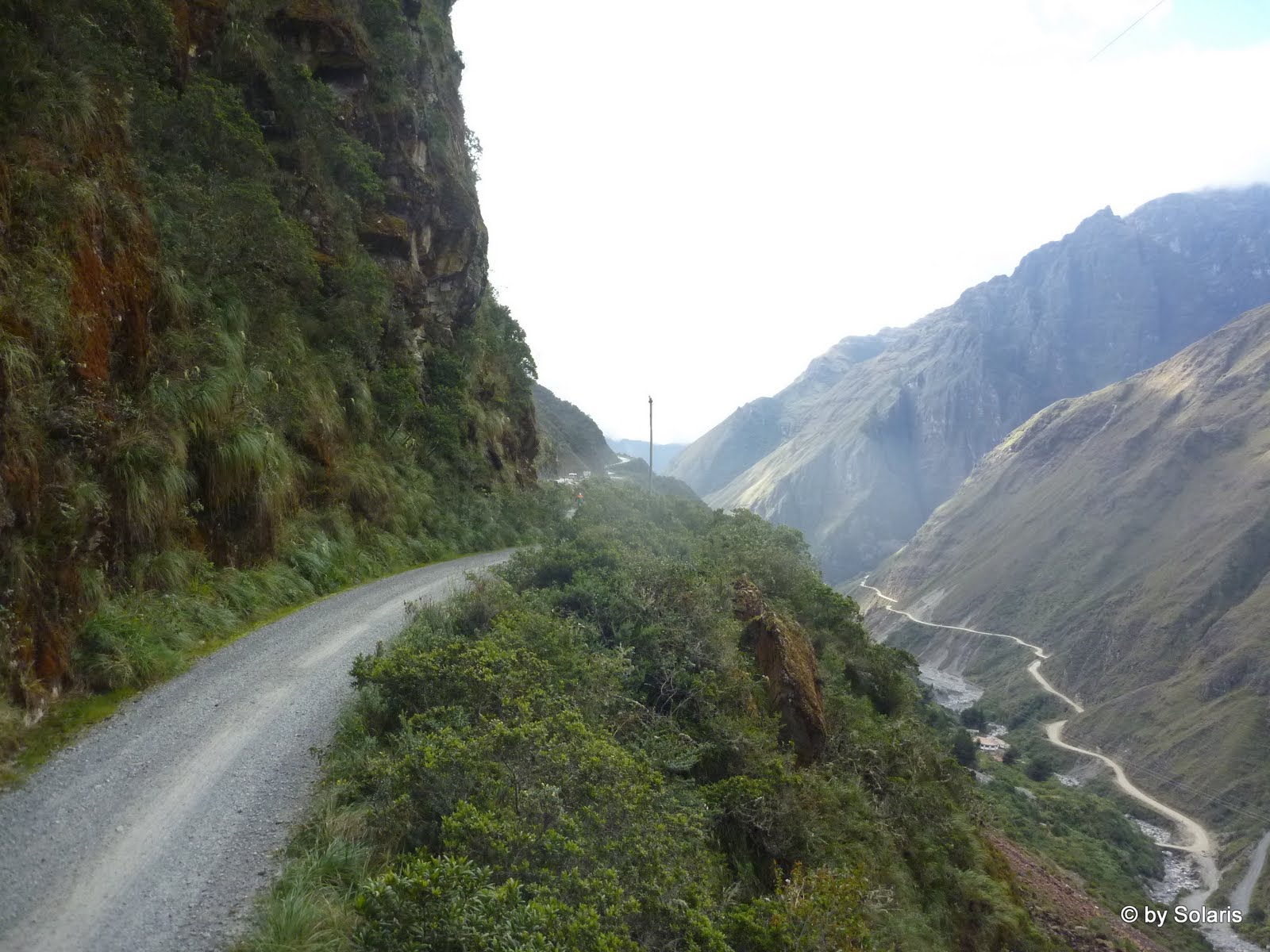
The bus left around noon in Rurrenabaque. It was a rather old, dirty bus; most people had lots of baggage and there was extra cargo on the roof. There was no bathroom, no air condition nor any other service on board. We set off on a dusty, bumpy road. The bus was cramped and it was hot. After less than two hours we had to stop the first time because of a flat tire. It took the driver about an hour to change the tire. Meanwhile everyone was standing on the road trying to find some shade. Afterward the road didn't get better. It was so bumpy, that sometimes I jumped off the seat. After a stop for dinner the road started to climb uphill. The road was very narrow and similar to the death road. In fact it was part of the old death road, going from the Yungas to La Paz. Mountain on the left side and cliff on the right side. Looking outside was scary. Especially if there were trucks and buses in the other direction. And it was dark as well. At one point we had to wait because there was a SUV lying on it's side on the road. A few people got off the bus and helped to turn the car back on it's wheels. Problem solved.
The night was very uncomfortable and early in the morning when we got close to La Paz it was freezing.
I was very happy when we finally, after 23 hours, got to La Paz and could get off the bus.

Saturday, August 6, 2011

RURRENABAQUE - LA SELVA

18. June – 20. June 2011

After three days on the river watching caimans and dolphins we went for a three day tour to la selva, the jungle. We started by boat in Rurrenabaque on the river Beni and arrived after a three hour trip at the jungle lodge in the Madidi National Park. We spent a few hours hanging around in hammocks before going for a first walk through the jungle. Again, I was hoping to see a jaguar. Again, unsuccessful. But at least, this time we saw jaguar footprints. But seeing animals in the jungle is very difficult and besides a few birds we mainly saw ants and lots of butterflies. The vegetation though is very impressive, with huge trees and green plants everywhere. We also went for a night-walk. It was interesting but a little scary as well. In the dark it's difficult to see much and with snakes and other dangerous animals around, I didn't feel too good walking around at night. The next morning we went for another short walk were we learned about plants and fruits and how they can be used. We also collected seeds that we used to make rings and bracelets. In the afternoon we set out for a night in the jungle. After a two hour walk we reached the camp. We set up our sleeping bags and moscito nets before going for another walk. We headed up a little hill from where the view over the jungle and river was amazing. But the best were the many aras (macaws) and other birds that were flying around. Aras are huge parrots that make lots of noises, usually fly around in pairs of two and always live with the same partner. Watching them was amazing. After a good night sleep outside, we walked to the river. There we built a little raft out of woods and floated on the river for an hour before reaching the jungle lodge. After lunch it was time to leave the jungle and go back to Rurrenabaque. On the way back we stoped at a little farm that grows sugar cane. There we learnt about the plantation of sugar cane and how cane juice is made. We drank liters of the very sweet but delicious juice.


Friday, August 5, 2011

RURRENABAQUE - LA PAMPA

15. June – 17. June 2011

From La Paz we flew to the small town Rurrenabaque. The plane was a tiny 18-seat plane, there was no stewardess and it was possible to look out the front window. The flight was short but the scenery below amazing. The plane flew quite close between 6,000 m high mountains. Amazing. The tiny airport in Rurrenabaque did have an asphalt landing strip but getting to the “terminal” meant rolling over grass.
In Rurrenabaque we checked in at an hostel, went for lunch and a walk around town and decided to spend the rest of the day relaxing. The next day we were organizing trips to the Pampa and Selva for the following days. There are many tour companies and almost all offered nearly the same for similar prices. So, deciding which company to choose wasn't very easy.
The following morning we left for a three day trip to the Pampa. By jeep it was a three hour drive to the small town Santa Rosa and from there another 15 minutes to the hostel. After eating delicious, fresh grapefruits and lunch we set of for the first tour. By boat we went on the river. We saw a few monkeys, caimans, turtles and many, many birds. Back at the hostel my camera finally died. I feared that moment for a while and knew it was coming. Still, I wasn't happy that I did not have a single camera to take pictures. Especially with so many animals around.
The next morning we went by boat in the other direction of the river. There were more birds, more caimans, more monkeys and many pink dolphins. Most monkeys were very small and were not afraid of people. Some of them even ran over the boat when we got close enough and. After a stop for lunch we went for a swim with pink dolphins. The dolphins were very playful and came quite close. Absolutely amazing. We also saw a few capybaras – the biggest rodents in the world that kind of look like huge but cute guinea pigs. After watching the sunset it was time to go back to the hostel. The last day we went fishing for piranhas. Again, I wasn't very successful (and didn't enjoy it either) but Carlos and Billy, our guide, had fun and caught around 30 piranhas. Most of them are rather small but still have sharp, powerful teeth.
After lunch (with rice and piranhas) it was time to go back to Rurrenabaque.

Tuesday, August 2, 2011

BIKING DOWN THE “DEATH ROAD”

10. June 2011

Most roads in Bolivia are in fairly bad conditions sometimes rather a path than a road. And there are a lot of dangerous roads. But there is one road – going from La Paz to the Amazon region Yungas - that is more dangerous than the other roads called El camino de la muerte (death road). Five years ago a new asphalt road was opened but before all traffic to the yungas had to go on that road – cars, buses, trucks. Mostly this dirt road is about three meters wide; on the right side is the mountain, on the left side a drop-off a couple of hundred meters deep. In addition to that, it's a rather steep road. In less than 70 km it descends from 4650 m at La Cumbre pass to 1200 m in Coroico. I don't understand how trucks and buses could go down that road – in both directions. But I do understand how 200 – 300 people could die here yearly.
Read an interesting description of this trip down the Death Road on BBC News.
Now most traffic goes over the new road and the old road is one of Bolivia's main tourist attraction. Crazy backpackers going down by mountain bike.
After beeing picked up at the hotel from the tour company we went by minibus to La Cumbre, the start of the downhill bike ride. There it was rather cold and there were icicles along the road. The first part of the trip was an eight kilometer downhill ride on the new asphalt road. Riding was very easy and the road wide and fairly good. But overtaking trucks by bike was a little weird. After an hour or so we arrived at the “real” Death Road. The road was very narrow with lots of curves. Going down full speed wasn't an option for me. Far too dangerous. Interestingly traffic going down is on the left side of the road (although normally traffic is on the right side). This meant biking close to the edge instead of biking close to the mountain. The ride was interesting and the landscape was changing from high mountain scenery to jungle vegetation. The scenery was amazing. Deep valleys, green mountains, a few waterfalls.

Saturday, July 30, 2011

LA PAZ


8. June – 12. June 2011

Nuestra Señora de La Paz is a special city and is different from other big cities in South America. The city is located in a valley at elevation 3600 m surrounded by 6000 m high mountains. Breathing is difficult and walking exhausting. Climbing stairs feels like climbing a 6000 m mountain. There are a few fairly modern highrise buildings but most buildings are smaller. We spent a few days in La Paz. Just walking around and enjoying the city.
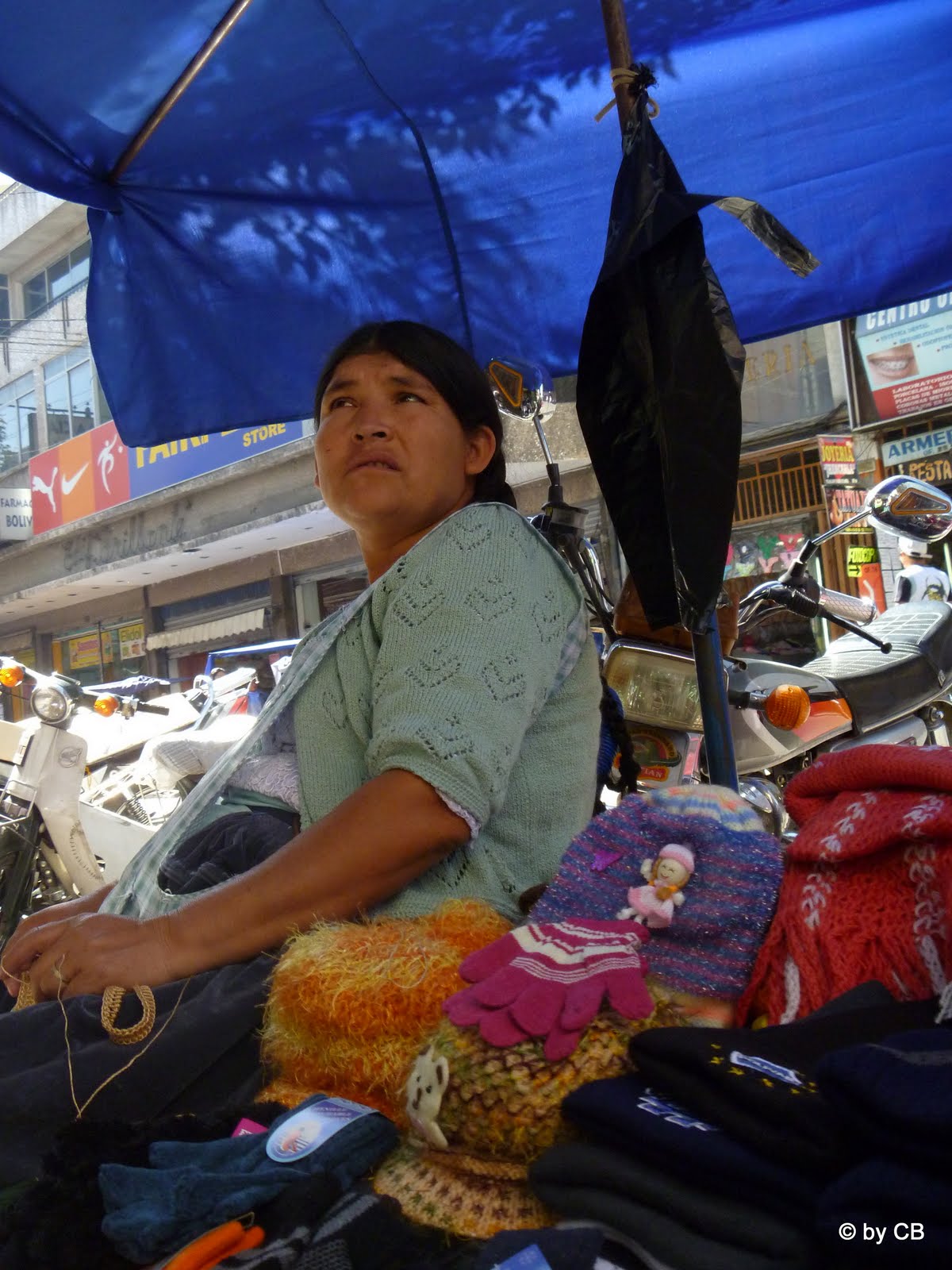
Many streets are narrow cobblestone streets, especially in the center. And the whole city seems to be a market. There are señoritas sitting everywhere selling everything. Some have little stands others spread there goods on sidewalks or streets. They sell fruits and vegetables, breads, fresh fish or meat, nuts and rice but they also sell llama fetus and cameras. I'm sure you can buy anything somewhere in La Paz – you only need to know where.


Friday, July 29, 2011

LAGO TITICACA - COPACABANA AND LA ISLA DEL SOL

6. June – 7. June 2011

After crossing the border to Bolivia our first stop was Copacabana at Lago Titicaca. After finding a hostel, the first task was to buy sweaters, hats and gloves. It was cold in Copacabana and even in the hostel room it was not comfortable. As we found out later this was true for most places in Bolivia.
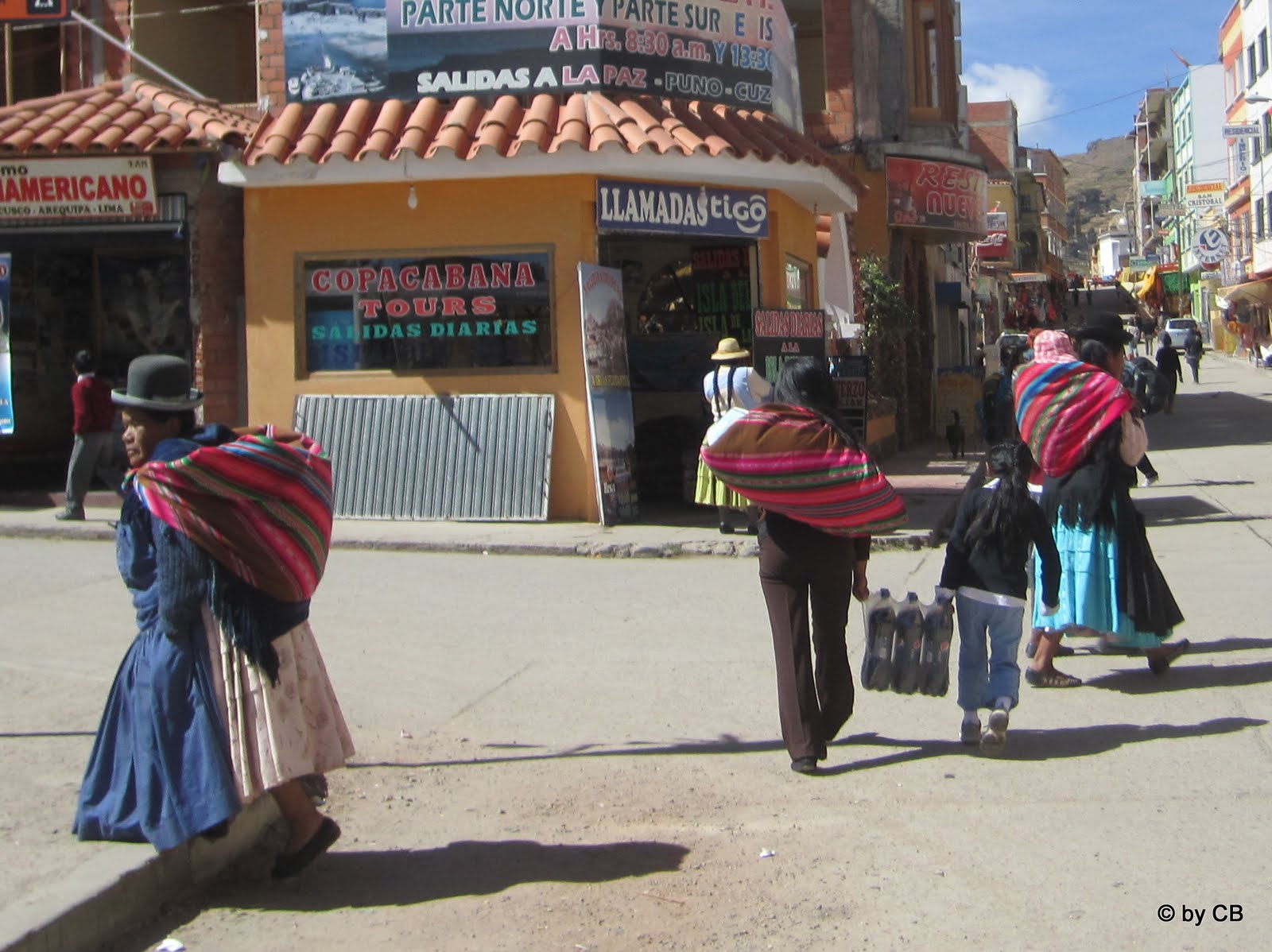
Around the central plaza in Copacabana was a parade with many women in traditional dresses and a few men. It was interesting to watch. It must have been a local holiday since later on lots of people were drinking in restaurants and at the street and dancing. After lunch near the “beach” down at the lake we decided to climb the little hill - Mount Calvario. The trail wasn't very long but walking uphill at almost 4000 m was still exhausting and took quite a while. The view from up there was great and worth the pain.
The next day we wanted to go to Isla del Sol (Island of sun) in Lago Titicaca. Unfortunately we got to the pier ten minutes too late and missed the boat. And there are only two boats daily. So, after waiting a couple of hours we went to the island in the afternoon. The boat was extremely slow (and uncomfortable) but the landscape beautiful. Arriving at the island we had to walk uphill to get to the hostel. Again, it wasn't far but here it was exhausting. Luckily we only took a small backpack for the one night stay. We stayed at one of the many small hostels and got a room with great view over the lake with view of the Andean mountains on the other side. We went for a little walk but didn't have enough time (nor energy) to get to the Inca ruins on the island.
In the morning we could watch the sunrise directly from the bed. This was especially nice because it was extremely cold at night and leaving the bed to watch the sunrise would not have been an option. And the sunrise was lovely.
We took the ferry back to Copacabana in the morning and this time it was even slower than the day before. In Copacabana we had lunch before taking the bus to La Paz.

Thursday, July 28, 2011

LAGO TITICACA - PUNO AND THE FLOATING ISLANDS

4. June – 5. June 2011

From Arequipa to Puno it was only an eight hour bus trip. As soon as we got off the bus we could feel the altitude. Puno is 3800 m above sea level and breathing is a little difficult. Walking slowly is strongly recommended. A cup of coca tea helps as well. But even sleeping wasn't easy without getting enough air. Luckily we got used to the altitude after a few days.
Puno is located right at Lake Titicaca and although it is not a very beautiful city, it still has a special atmosphere. Besides the main tourist road, it doesn't feel very touristy.
We got there at the day of elections but luckily there were no demonstrations or protests.
We walked through town, the market and to the lake. At the harbor there were boats leaving to tours around the Islas flotante (floating islands) and we spontaneously decided to join one of these tours.
First we stopped at a small island where six families live in small, traditional houses. Almost everything (islands, houses and boats) is made from reed. It was very interesting to see these islands and learn about the construction of them. The islands are made of blocks of reed that is growing in the lake. Reeds at the bottom of the floating reed blocks rot quickly and new reed is added to the top. Walking on this island was exciting as well because each steps sinks in a little into the reed. The houses are tiny huts that only contain a bed (made of reed). Life on the islands is very basic and many families nowadays live from tourism by showing their houses and selling artwork.

Monday, July 25, 2011

ANOTHER WEEK IN PERU

26. May – 03. June 2011

I arrived in Lima late at night and went to a hostel near the airport for one night. The next morning I went straight to the bus station to buy a ticket to Mancora in the north of Peru. The bus wasn't leaving until late afternoon and I had some time to kill. This was no problem since there was a Starbucks across the street. After an overnight bus ride I arrived in the morning in the surfer town Mancora. I checked in at the hostel and waited for Carlos to arrive in the afternoon.  The next few days we spend with walks at the beach, talking, watching surfers and enjoyed spending time together. It was nice that Carlos' brother Leo and his girlfriend came to Mancora as well and it almost felt like being back in Canoa. Almost.
One day we walked to the pier. There were a few fishermen and one was feeding small fish to the birds. There were tens of pelicans and frigate birds. An interesting sight.
After relaxing for a few days in Mancora, we headed south to Lima. There we spend two days – since I'd been there before, I could show Carlos Lima's old town, Miraflores and my favorite Starbucks. We only spent one night in Lima before taking the next overnight bus south. Next stop on the long way to Bolivia was Arequipa. The day there we spent walking around the beautiful old town with whitish buildings and visiting the Santa Catalina monastery. Last time I was in Arequipa, I didn't have much time at the monastery and didn't mind visiting it again. It is a very beautiful complex of small, colorful, old buildings and orange and blue plazas connected by little streets.
From Arequipa we headed to Puno at Lake Titicaca near the Bolivian border.


Tuesday, July 19, 2011

ELEVEN AIRPORTS IN FIVE WEEKS


From MVD (Montevideo, Uruguay) to GIG ( Rio de Janeiro) from there to SSA (Salvador de Bahia) and on to BEL (Belem). After traveling by boat for a few days from STM (Santarem) to MAO (Manaus), from where we flew via GRU (Sao Paulo, Guarulhos) to IGU (Foz do Iguacu). Then I traveled a part by bus. From FLN (Florianopolis) to CGH (Sao Paulo, Congonhas) and on from GRU (Sao Paulo, Guarulhos) to LIM (Lima, Peru)
Most of the traveling on my trip through South America I have done by bus. And sometimes they were rather long bus rides. But Brazil is a huge country and flights are not much more expensive (and sometimes even cheaper) than buses. And deciding between a two hour flight and a 40-hour bus ride for the same price is quite easy. Besides that, Bine only had four weeks in Brazil and we didn't want to spent half of that time in buses.
Almost all of the flights left after midnight and we usually got to the airport by bus. Often we got to the airport around 9pm (we took local buses to the airport and these usually didn't run late at night) and had to wait for a while. Then arriving after a one or two hour flight early in the morning at the next place. We didn't want to spend lots of money for taxi and a few hours of sleep in a hostel and normally stayed at the airport. That meant looking for a quiet spot, preferable with seats without armrests for a few hours of sleep or at least rest before taking the bus to the city center / hostel in the morning. For everyone intending to spend a night at an airport sleepinginairports.net is a great website.
Most airports looked the same and the time there was quite uneventful. But a few experiences I will remember:
When we got to the Salvador airport to catch our flight to Belem, our first stop was the washroom. We hadn't noticed that our packs got really dirty on the local bus and after carrying the backpacks, our shirts where dirty too. Therefore we spent some time washing our t-shirts in the airport bathroom.
In Santarem, a very small airport with maybe twenty flights a day, we were asked by an airport employee, if everything was ok and if we need anything. That's service.
In Florianopolis I was waiting longer in line for the check-in than the flight took to Sao Paulo, which was less than an hour.
At Sao Paulos GRU airport, on my way to Lima, I had to wait a lot. First check-in line, then security check, then migration. It was good that I was at the airport three hours before departure, since I needed almost all that time to get to the gate.

Friday, July 15, 2011

VISITING EDITH IN MINAS GERAIS

23. May - 24. May 2011

When I was living in Florianopolis ten years ago, I stayed with Edith and her family. Now she is back in her hometown Pouso Alegre in the state Minas Gerais and I went there to visit Edith there. From Sao Paulo I took a bus that started nightmarish. The bus was fairly empty but next to me was sitting a drunk and crazy man. He tried to talk to me but I pretended not to understand but told him that I'm German. He than tried to find someone in the bus who spoke German and could talk to me. He constantly mumbled how bad it is that I only speak German and continued to try to talk to me although I used my earphones. He was kind of annoyed when I moved away to another seat to have some peace.
Edith waited at the bus station for me. After a stop at her now apartment we went on a tour through town by car. I have to say, that Pouso Alegre is not the prettiest town but that wasn't the reason why I went there anyways. The surroundings are quite pretty though with lots of green hills. We also went to the towns "zoo" but there were only animals in concrete and two old, very sad looking lions.
After picking up Edith's son Arthur from kindergarten and dinner we went to bed early.
The next day Edith, her dad and me drove to the town of Poco de Caldas. The drive there was quite nice with lots a green hills, coffee and banana plantations and little villages. We walked around town, had sushi for lunch, enjoyed the view over the town from a hill with a Christo statue,  visited an old huge hotel with a nice garden and went to some waterfalls. Back in Pouso Alegre we had dinner at Edith's parents place. My last day there I went with Edith to a town close to Campinas, where Edith had lived before. There we drove up to the hill "piedras grande" where usually are many para-gliders but we didn't see any. The view from up there was worth the drive up the bad road. After lunch and a good coffee it was time for me to catch a bus back to Sao Paulo.
Edith - it was great seeing you. Thanks for everything.

Thursday, July 14, 2011

VISITING DANIEL IN SAO PAULO

21. May - 25. May 2011

I've been to Sao Paulo before. Ten years ago for only one day. And I didn't like it. I remember it as a crowded, dirty and unsafe city. But this time it was a different experience. My good friend Daniel, that I met a long time ago in Florianopolis, picked me up at the airport and showed me the city from a non-tourist view. First we went to a small flea market before going to a restaurant / bar for typical Brazilian feijoada (beans and meat). There was also live samba music. At night we met up with friends of Daniel and went to a club with live music. Coincidentally the same band as in the afternoon was playing at this place as well. Which made me questioning if there is only one samba band in the 14 million people city of Sao Paulo. Anyways, I had a good time.
Sunday we went to the Ibirapuera park - Sao Paulo's central park - for breakfast, walking, talking and people watching. After that we had an immense sandwich at the Mercado municipal before going to the soccer museum. The next day I went to Minas Gerais to visit my friend Edith. When I returned I spent a few more great hours in Sao Paulo. With Daniel and his friend Bio, who just had returned from a year traveling around the world, we went out at night. First we went to a rather fancy bar were everyone was very well dressed. In our traveler suit (comfy and not the newest clothes) Bio and I felt quite under-dressed. Not my kind of bar but a good experience anyways. Afterward we went to a small bar to meet more friends and were drinking beer on the street in front of a bar that was closing. Thanks guys for a nice night out. The next morning after breakfast it was time to head to the airport to catch my flight to Lima. Daniel – thanks for a great time in Sao Paulo. It was great seeing you – as always.

Tuesday, July 12, 2011

BACK IN FLORIANOPOLIS

17. May - 21. May 2011

Ten years ago I did an internship in Florianopolis for three months. And now I was back.
But this time was totally different. None of my friends are living here anymore and I stayed at a hostel right at the beach in Barra da Lagoa. It was rather cold and raining but still very nice. Most of the time I spent at the hostel relaxing or with walks at the beach. There are so many beautiful kilometer-long beaches on the island of Santa Catarina that one could spent weeks walking.
Although it was very different from my last visit, I had a good time and enjoyed it a lot. 


Monday, July 11, 2011

ITAIPU DAM

16. May 2011

After going to Paraguay in the morning, our last stop in Foz do Iguacu was the Itaipu dam - the second-largest generator of hydro-electric power in the world.
First we enjoyed the sun while waiting for a tour. While I did the special tour (with entrance inside the dam), Bine did the normal tour because there was only one spot left on the special tour. Danke!
The dam is huge and besides a few machines there is not much else to see (at least for us tourists) than concrete. Lots of concrete. But the dam is an impressively huge structure and quite interesting to visit.
I was shocked when I heard that during the construction (five years) more than 100 people died. In my eyes that is quite a lot but the guide thought it's less than 1% and therefore not many.
At night it was time to say goodbye to Bine, my traveling companion for four great weeks in Brazil.  DANKE for a great time, good talks, lots of fun and everything else.

Saturday, July 9, 2011

90 MINUTES IN PARAGUAY

May 16, 2011

We decided to check out the tax free shopping city of Ciudad del Este in Paraguay just across the border near Foz do Iguacu.
We wanted to look for cameras. After four weeks in Brazil, of our three cameras only one camera was partly working (my SLR got either stolen in a hostel or I forgot it at the Manaus airport, my compact camera has lens problems and the zoom doesn't work, Bine's outdoor camera wasn't as waterproof as it was supposed to).
Going for one day from Brazil to Paraguay not even requires dealing with any border issues. Ciudad del Este seems to be not more than shopping malls and small stores selling mainly electronics. We checked a few stores but all was a little dodgy and we weren't sure the cameras were original or fake. So, after less than two hours in Paraguay we took the bus back to Brazil without new cameras. Hope my cam will work a few more weeks.

Friday, July 8, 2011

IGUACU FALLS – SPECTACULAR WATERFALLS

13. May – 16. May 2011

The first day in Foz do Iguacu was a relaxing non-touristy day. We walked through town (which had not much to offer), hang out in the sun and didn't do much else. The next morning I discovered that my SLR camera was missing. I'm still not totally sure how it disappeared but it most likely got stolen in the hostel. Well, maybe that's the punishment for complaining about carrying the big and heavy camera all the time. What's worse is that my compact camera doesn't work properly either.
Anyways, we got to the waterfalls fairly early in the day and there were not too many people (thanks to the low season). We walked along the trail were we had nice views of the waterfalls. They were very impressive. A lot of water. Including the Brazilian and Argentinian side there are over 250 waterfalls most about 60 m high.
Day two at the waterfalls was time to explore the Argentinian side of Foz do Iguacu. Even better views here. Almost all day we walked along several trails with amazing views. And as the day went on it got better and better. And even with only one camera we took lots and lots of pictures.
It is fascinating that at the end of two days looking at waterfalls, waterfalls and more waterfalls it was still amazing and we were nevertheless impressed by every different view and new waterfall.

Wednesday, July 6, 2011

FOUR DAYS IN THE JUNGLE

9. May – 12. May 2011

We left Manaus early in the morning by bus and arrived in a little village after a three hour bus ride. There we took a small boat upriver. After about an hour on the rio Urube, we arrived at the jungle lodge. The boat trip to the lodge was already stunning. Since it was rainy season the water level was high and many trees were a few meter under water. The water was very calm and everything (boat, trees, sky) was reflecting.
When we arrived at the lodge, we got a little tour through the area, got our room and had lunch. The next few days we would spend most of the time with our guide Jaime (aka Jungle James) and Benoit from Switzerland who had booked the same tour.
After a rest and a short walk in the jungle around the lodge, we set off for the first tour to explore the flooded forest by canoe. Due to the high water level, the trees are about five meter under water. To paddle through the forest on the very calm and flat water was amazing. The trees were reflecting in the water and sometimes it felt like sitting on a mirror. I loved being there. We also fished for piranhas. Luckily the others shared their catch with me because otherwise there would have been only rice for dinner for me. Everyone else was quite successful and at the end we had about ten piranhas. But Bine was not happy that she killed a piranha and made sure she didn't eat the fish that she caught.
After watching the sunset over the river from the observation tower, dinner and caipirinha, we went out by canoe in the dark to try to find caimans. And we found one - a tiny five day old baby caiman that I took into my hand without been bitten.
The next day in the morning we were woken up by James very early in the morning to paddle out on the river to see the sunrise. It was nice and calm and picturesque. After breakfast we left the lodge for a nice long walk in the jungle. James explained several plants and how they can be used as medicine and how to build tools from them. For a while we walked on an existing trail but most of the time, we walked off-trail. I still don't know how James knew how to find the way back to the boat.
On the way back to the lodge it started raining (every day it was raining for a few hours around noon) and since we were wet anyways, Bine and me went for a quick swim in the river. Good fun. We relaxed for a while at the lodge before packing up for a night in the jungle. After about an hour walk, we arrived at the so-called Jungle camp. Not much more than some branches to hang our hammocks and a plastic tarp for protection in case of rain. We brought some food that was cooked over the fire and made our plates out of leaves and spoons out of wood (only the plastic cups for caipirinha at night and coffee in the morning we brought from the lodge). I put my hammock up between two trees and it was great to sleep outside in the forest - only noises from nature and very fresh air. Luckily it was not raining at night and I slept very well. In the morning we went for another walk in the jungle. I hoped to see a jaguar (which is extremely rare and chances are very low) and of course didn't see one. But we did hear lots of birds and saw toucans. We also saw a fairly big snake which James chased through the woods so we could see it better. Of course it was raining when we walked back to the lodge. Again I went for a swim. This time I swam to the trees in the middle of the river. It is something quite special to swim to the top of a 8m high tree. Thanks James - I would not have been brave enough to swim there alone.
In the afternoon it was time for some more canoeing in the flooded forest, piranha fishing and dolphin spotting. After dinner, caipirinha and star gazing I set up my hammock outside again. Everyone else was sleeping under the roof but I just liked being able to sleep outside too much. It was a little cold in the morning but otherwise I had a good nights sleep in the hammock again.
The last morning we went to visit a local family. Their housing was very simple and they lived from growing manioca, a woody shrub which roots are used as food. It was sad to see that all around their house there was plastic garbage lying around.
After another swim in the river and lunch it was time to pack and go back to civilization. After four great and very quiet days at the river far away from electricity and traffic this was a little disturbing.